MANUSCRIPT MUSINGS: The Art of Smell

As writers, one of the things we hope to achieve is the total immersion of our readers; we want them to mentally plunge into another world when they read our work. Transforming a setting from words on a page into a breathing, 3-D landscape is through use of the five senses: sight, hearing, touch, taste, and smell.

Sight is the primary sense used to describe things, but to make the reader almost astral travel requires an equal use of the other four senses. Some may not agree, but I think the most important of the other four is smell.

Sounds easy, right? Not exactly. Descriptors—words like “rank,” “sweet,” “sharp,” and many more aren’t specific enough to evoke a physical response, nor do they necessarily have a targeted connection to the environment, character, object, or whatever else is being described.

Here are some tips for creating unforgettable smells that will flesh out your world.

Unfamiliar Smells

The way to get your readers to actually smell something, almost physically—even if it’s an unfamiliar smell or one that doesn’t exist (such as one that might be of an alien planet)—is to combine two common, familiar smells. Not everyone might know what the inside of a feed store in a heat wave smells like, but if it’s described as filled with the close and humid reek of moldy bread and fresh-cut wood, those are smells readers can imagine, so they might actually inspire a physical reaction. An office first thing in the morning might smell like coffee with the faint undercurrent of toner ink. A movie theatre auditorium might smell like stale popcorn and upholstery.

The good news is that the combinations are endless—and it even becomes fun. Consider newspapers and bug spray. Lavender and motor oil. The heavy scent of roses and fish fry. Cherry coke and a bar floor.

The trap is that the smells used have to be common. Or mostly common. One thing we see quite often in our darker reading travels is something “smelling like death.” It’s important to remember that unless readers are undertakers or work in some other field in which they’re around dead human flesh, it’s a good bet none of them is going to get a transportive effect from that. If you don’t know what death smells like? There are two options: A, blend two more common odors that might imitate what you think a body smells like, or B, skip it, and do something else. Maybe the room where the body is smells like bong water and rancid meat, or dirty socks and mold. If there’s a dead body in the room, readers will get the picture from the visual. Just make sure that room smells like something terrible.

Connotations of Smells

While we’re on the subject of terrible smells, the connotation of a smell should also be considered. Smells can tell us if something is awful and dark, or if something is good and light, and ultimately, can support the atmosphere and mood of your story or scene.

Take, for example, a carnival. If it’s a pleasant experience for the character, or if it’s supposed to be a positive, light scene/environment, it might smell like cotton candy and roasted peanuts. If it’s a place that seems pleasant on the surface but has something nasty going on underneath, it might smell like cotton candy and trodden mud. If it’s a bad place, it might smell like burnt funnel cakes and vomit. Each of the smell combinations I listed—while not very original—evoke three completely different emotional responses.

Smells are not just about the environment; they can tell readers so much about the characters: who they are, what they do for a living, or even what they’ve just been doing in a prior scene that isn’t rendered in your piece. A person who’s just finished readying to go out might smell like hairspray and the slight burnt electric smell of a hot iron. A mechanic might always smell like engine grease—or engine grease and a certain type of cologne or perfume if the person’s not actually on the job. An exterminator working out in the sun all day may come home smelling faintly of chemical and sweat. If someone’s just finished baking, that person might smell like a sweeter range of spices and the blander hint of flour.

When connected with characters, smells can also signal one character’s feelings toward another, or whether a character is good or evil. A character romantically attracted to another may notice nothing but pleasant smells, like lavender and vanilla or cedar and hot sand. If there’s dislike, conflict, or if the person’s the character’s enemy, the smells noticed may be more negative. However, this isn’t a hard and fast rule. Sometimes, it’s interesting to make the “bad guy” smell “great.”

Indigenous Smells

If your story’s in a real-world setting, such as a specific city or an environment like a desert, mountains, or near the sea, it’s important to figure out what smells would and wouldn’t be in that location. Someone who steps off an airplane in the Arctic Circle isn’t likely to be hit with the smell of apple trees or suntan lotion, for example. Woods in the state of Connecticut aren’t going to smell like cactus or oranges, just like an afternoon in Florida isn’t going to smell like freshly-fallen snow and cinnamon (unless, of course, it’s a freak snowstorm in Florida that’s being rendered). An oil rig at sea is unlikely to smell like fresh baked goods. You get the idea, but make sure the smells make sense for the environment.

An area’s flora is a great resource. If you’re unfamiliar with the vegetation that’s in a specific area, there is plenty of online data. Googling something as simple as “what kinds of trees exist in Bungtown, New York?” or “What kinds of plants do well in gardens in Austin, Texas?” will turn up a lot of interesting information. Extra hint: travel bloggers are really good at describing localized scents. If you’re working with an urban setting, you can also consider some of their regional foods and festivals as sources of specific scents.

Strength of Smells

When combining smells, it’s best to go with two strong ones, or a strong one with a whiff of a weaker one, and they have to be easy for the reader to summon—just like too much description, too much of a complex smell that the reader has to stop and think about can slow down pacing and pull the reader out of the story. Roses and bleach is a pretty strong combo that creates an instant reaction. Roses and rice, though—rice doesn’t have that much of a smell, so it’s a little bit harder to conjure. On the opposite end of the spectrum, smells like cooking bacon or the Thanksgiving turkey are difficult to compete with, so if an odor like that is required, you can probably just go with the one and that works just fine.

If two strong smells won’t work for the situation, use two strong smells and just make one weaker. Cigarette smoke and an undercurrent of funeral flowers, for example. The dominant smell should be the one that makes the stronger point for the story, scene, or setting. If someone is applying perfume in a bathroom to fix herself up before returning to her date, that bathroom should smell more like musky lilies with a hint of lemon cleaner, not the other way around.

Test it out

When trying out smells to use, close your eyes and imagine your scent combo. If you can “smell” it, your readers will, too. If you can’t, try another combination.

What if you have no idea what something smells like?

This can, sometimes, be a little bit tricky if you’re not from a certain area, because you might not know how a certain flora, food, or weather condition smells. If saying something like, “the fields smelled like dandelions” and you don’t know what dandelions smell like? Just Google “what does a dandelion smell like.” Something always turns up (I personally think dandelions smell faintly like baby powder and cut grass). If you’re confident that most readers will know the scent of dandelions, then dandelions can be used in combination with something else—“Mom liked to paint outside, and she always smelled faintly of dandelions and turpentine.”

Less is More

It may be tempting to use more than two smells, but it’s best to stick to the formula—it’s just enough to inspire the reaction. More than two, and it’s hard for the reader to nail the combination. We’re not sure why this is, exactly—there’s probably some physiological reason for it—but try the experiment yourself. With two, your brain can produce a “blend.” With three? It doesn’t quite work; it’s too hard to grasp.

In addition, restraint is also a good idea. A couple of smells sprinkled in a short story is sufficient; not everything has to have a smell.

Be Present

When you’re out in the world—even when you’re not writing—keep a notebook with you and write down what you smell in various locations; the best way to be accurate is to record the way it is in reality.

We hope this was helpful! Comment below if you have questions, or if you’d like to share a smell combo of your own!

SIXTY-SECOND SUB TIPS: Coping with Rejection

Rejection is an ugly part of the business, but it’s going to happen no matter what you do or how awesome your work is. If you’re a writer, it’s best to develop a thick skin—get over that disappointment quickly, and turn around and send the piece someplace else. But if you’re really upset about a particular rejection—and it happens every once in a while, no matter how many hundreds you’ve received in your career—here are some coping methods we’ve found that really work.

TIPS FOR COPING WITH REJECTION

♦ Call and writing friend and bitch—be sure to explain why this particular rejection is bothering you so much. Did you tailor the story specifically for this market, for example?

♦ Treat yourself—DVD you want? Book you want? Game, dress, waffle maker?

♦ Pick twenty other places to send the story to.

♦ Have your favorite beverage/snack/meal/dessert.

♦ Go out to dinner, or to the movies—something that’s immersive and distracting.

♦ Break/destroy something if you’re angry (you’ve probably got junk around the house you’ve been meaning to chuck anyway).

♦ Burn your rejection letter.

♦ Do some type of physical activity—go for a jog, swim, walk, or whatever you like to do.

♦ Start working on a non-writing project, one that will show progress, such as cleaning your house, making a scrapbook, putting together that model you’ve always wanted to finish.

♦ Share all around; you’ll gain lots of sympathetic support. However, IF YOU NEED TO PUT SOMETHING ON SOCIAL MEDIA, BE SURE IT’S APPROPRIATE. Here are just about the ONLY appropriate ways to phrase it for social media:

“I just got a rejection letter. Bummed!”

“I just got a rejection letter from a market I was hoping to get into. Back to the drawing board!”

You really have to watch what you post on social media. Editors talk, just like writers talk. You don’t want to get yourself black-balled. If you want to be nasty—it’s fine, we’ve all done it—do it privately and with people you trust.

♦ Keep in mind that as much as writers don’t like getting rejections, editors don’t like sending them—with few exceptions, most editors were or are writers, too, and we know how it feels to be on the other side of the desk. No one takes glee in telling a writer “no thank you.” The worst part of the job is knowing you’re going to make someone feel bad or turn their day into a disappointment at best, crush their hopes and dreams at worst. Truly, it’s not much fun for editors, either.

The Autumn 2022 Submissions Window is Now Closed

Thank you all for your submissions! Our window for the Autumn 2022 issue is now closed. If you have submitted and have not yet received a response from us yet, you will receive a response no later than August 31.

If you need to contact us regarding withdrawing a submission, you can reach out to us through our Contact Page, or send an email to 34orchardjournal@gmail.com.

Enjoy the rest of 2022! We will be open for submissions for the Spring 2023 issue from January 1 – January 15, 2023.

Happy Independence Day Weekend! 34 ORCHARD taking submissions now through July 15!

34 Orchard’s Autumn 2022 submissions window is now open! We will only be open from July 1 – 15, 2022, so if you’re planning on submitting, please keep in mind that anything after July 15, 2022, will be deleted unread (and yes, we adjust for all worldwide time zones. So that’s after July 15 at 11:59pm wherever you are).

Please refer to our guidelines for information on how to submit. Check that out here at https://34orchard.com/guidelines/, and we look forward to reading your work!

SIXTY-SECOND SUB TIPS: Final Manuscript Polish Checklist

No manuscript, no matter how hard any of us tries, is perfect; there is always going to be at least one tiny mistake someplace. It’s the nature of what we do. Why? It’s because our brains, when reading, fill things in for us.

One thing that can help cut down on the number of typos/small errors is reading the story or poem aloud; there’s something about the connection between the brain and the mouth that magically exposes items like missing words, misspellings, and even sentences that might be unwieldy or too long.

Beyond that, what are some other items to check before you send your newest baby out into the world? Here’s a checklist we hope will help you, and happy submitting!

CHECKLIST FOR MANUSCRIPT POLISH

♦ Read aloud for typos, missing words, rough sentences

♦ Check paragraphs/sentences for double use of words/phrases too close together

♦ Check Properties for correct title and author name; correct if necessary. You must always hit “Save” after altering anything in Properties, or it won’t take.

♦ Make sure word count is correct

♦ Make sure font and point size in header (Last Name/Title/Page Number) are in same font as manuscript text

♦ Check against Shunn formatting: margins, et cetera

♦ Check to ensure that the text throughout is left-justified. Sometimes, a random paragraph here and there can get centered, right-justified or justified by accident.

♦ Remove spaces in between paragraphs under the Paragraph Tab

♦ Ensure tabs are replaced with hard indents of .5 in the Paragraph Tab

♦ Ensure any notes to self/Track Changes/odd typefaces or colors have been removed or changed

♦ Ensure double spaces are removed after each sentence—there should only be one space after each period, not two

♦ Ensure the em-dashes are not – or — , but –

♦ Check to ensure internal thoughts—or anything else that was meant to be rendered in italics—is in italics

♦ Make sure that, in your contact information, your address/email (this one especially) and phone numbers are correct

♦ Make sure that your scene breaks are separated with #. Unless the market specifies something different, this is the professional default.

♦ Make sure widow and orphan control is turned on.

♦ Make sure the “don’t hyphenate” box is checked. This will keep words from being hyphenated at the ends of lines.

♦ Check that any numbers are rendered correctly. For Chicago style, any numbers 1 – 100 are written out (as in, one – one hundred); there may be some exceptions. A quick Google of “Chicago Style Guide Numbers” will yield the information you need if you’re not sure.

♦ If you changed the names of any characters mid-stream, ensure that there aren’t any of the old names in there. Use the search function to type in the old names and ensure there aren’t any hangers-on.

♦ Check that all apostrophes/quotes are “smart.” Sometimes, when working with a document many times over on several machines, there are sections with flat text apostrophes/quotes.

♦ If you are having trouble fixing formatting or anything on your document, your best bet is to copy, cut, and drop it into a new document and save it as text and “start fresh.” However, you will then have to go through this entire checklist again.


It’s OFFICIAL! We will hold a Release Day Zoom Cocktail Hour for the contributors of each issue’s launch

Issue 5 Celebratory Glass of Wine

It’s always been one of 34 O’s missions to foster a sense of community among its writers, and while we’ve spent the past two years/five issues focused mainly on our magazine and its content, we now have a little bit of time to start better aligning with that mission.

Aside from starting a monthly blog series, we’ve figured out the mechanics (mostly) of holding a Zoom cocktail hour as part of each issue’s launch. A magazine/journal isn’t just a team effort by its staff—its contributors are a large part of its success, and we wanted to find a way to acknowledge that.

We’ve tried this idea previously—our in-person “launch” party, which was intended for only our friends, became an all day, four-session Zoom event due to the fact that we were all on pandemic lockdown. We tried an online Zoom party for Issue 3 for just the writers of all three issues, and while it was very successful and a total blast, we felt the “event” aspect needed some fine-tuning into something a little less formal and overwhelming (it went on for five hours).

Last night, we tried again, with a one-hour cocktail toast limited to just the current issue’s contributors, and were thrilled that it was a really great time. Everyone was relaxed, and the writers got to not only share what they were working on as well as their goals and dreams, they were in touch with each other, which was what we were going for.

Based on its success, then, I’m thrilled to announce we’ll be doing this for each issue: on or near launch day, we’ll hold a one-hour cocktail (or other beverage) toast that evening with any of the issue’s writers who wish to attend.

There’s still one tweak we’d like to make—we may do it the closest weekend to launch, so that we can hold it earlier in the day here in the US and any of our international writers who are in the issue can also attend. We haven’t really figured this part out yet, but bear with us—we will!

ISSUE 5 HAS ARRIVED!

It’s time … twenty-five artists focus on the things we refuse to see. Lovecraftian crazy in the Old West, Kerouac-style bummin’ with a morbid twist, Poe-esque madness on the open sea, Nin-inspired snails and more await. There are seven heartbreaking, chilling poems, a nightmare-inducing tale from Poland, and an exclusive excerpt from a forthcoming speculative memoir. A few familiar favorites, like Ali Seay, Die Booth, and Patricia Bettis, and some fresh new voices. You’ll want to get your eyes on this issue.

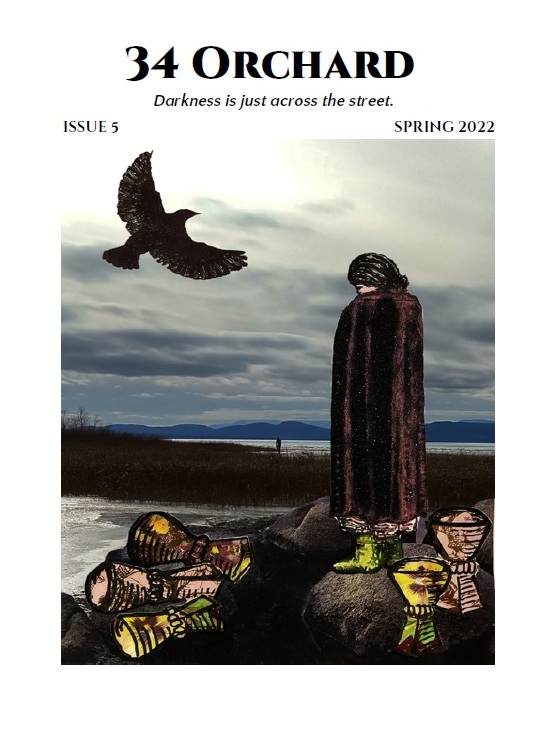
34 ORCHARD Issue 5 Spring 2022 Cover

The downloadable PDF is designed so that it can be printed on double-sided paper for easy reading like a print magazine. As always, the issue is free, but there is a donation link should you choose to contribute.

Click here to get your copy!

If you like what you’ve read, spread the word! We’re also starting up some resource content for both writers and readers on our blog, so consider signing up to get those posts right in your email.

SIXTY-SECOND SUB TIPS: Formatting

Welcome to our Sixty-Second Sub Tips series, where we’ll take a close look at various aspects of the general submission process to get skills sharpened and foots in doors! The sixty-second part? There’s a Quick Review Checklist Box at the bottom of each post!

We have lots of goodies planned for this series, including a thorough pre-submissions checklist, can’t fail cover letter templates, and more. We’re aiming for once a month. Sign up using your email in the box at the footer of our website, and you’ll get a notification in your inbox when the next installment is published.

After our first Manuscript Musings post (now that the Spring 2022 issue is in the bag, another one is coming soon), some of our readers asked for tips on proper manuscript formatting.

Why is this important? Formatting a manuscript professionally is critical, because it ensures easy reading and room for notes (on paper or electronically, especially if Track Changes is used), which, in turn, keeps the publication’s workflow moving—which means a faster response time to writers.

Why should you care? The truth: editors have hundreds, if not thousands, of submissions to read and evaluate, and decision-making is always difficult. Anything that can be eliminated quickly is helpful. Therefore, those that aren’t formatted according to the project’s guidelines, or even just professionally, are an easy mark for rejection. In fact, it’s stated in many guidelines that improperly formatted submissions won’t even be read.

Unfair? No. Efficient business. Employers do the same thing when they’re screening job candidates. The similarities between the two processes are staggering: editors, like employers, are looking for the best match.

Professional formatting makes a positive first impression. It sends the message that you’re not only serious about your art form, you consider yourself a professional, which, in turn, indicates that you’re going to be easier to work with. Any manuscript will go through edits before publication, which means you’ll be working as a team with an editor. A properly formatted manuscript tells editors you know what you’re doing, resulting in less time, less hassle, and a better final product.

Scenario: Suppose there are two stories in the pile competing for one spot. They are equally our vibe, and equally excellent. One manuscript is professionally formatted. The other isn’t. I can’t speak for any other editor, but I can speak for myself. This is what would go through my head:

Professionally-formatted manuscript: Wow. This person’s a pro, so I won’t have to worry about having to spend time explaining how the process works or how to use Track Changes. This person will probably take my editing suggestions seriously and will be as open to compromise and discussion as I am, because we both want the best result. This person will probably understand that we’re on a deadline and will respond in a timely manner. The manuscript will be easy to prepare when we send it to layout, because we already know what we need to change to fit our format—three or four quick changes and off it goes. This is going to be a breeze. This is going to be fun.

Improperly-formatted manuscript: Formatting professionally is easy. If this person’s serious about the work, why didn’t this person do it? If it’s a lack of experience, then, does this person know how to use Track Changes? How much time am I going to have to spend walking this person through the process? Will it take forever to get the edits back because there’s a lack of knowledge about what’s a good suggestion and what isn’t? If it’s not professionally formatted because this person believes he or she is so good he or she doesn’t need to follow the rules, then there’s an arrogance there, so … is this person going to balk if I make a small change? Will we be able to come to any compromises if the person doesn’t like my suggestion? If it’s out of laziness, will this person just not respond in a timely manner or not want to do anything further and cause a disruption in our workflow? We’ll also have to strip the entire thing down to text and reformat it, because we don’t know what’s lurking underneath the code that might mess up our layout process later. That will mean I’ll have to compare the original with the plain text to make sure I don’t miss any paragraphing, bolding, or italics, and I’ll probably have to reformat all the smart quotes and everything, which is easy enough with search and replace, but one or two always gets missed, which means I’ll probably have to read it aloud more than once to make sure. I’m anxious about what it will be like to work with this person, and it’s going to be more work no matter what. Ugh.

Guess which one gets the coveted slot?

I have no problem appearing judgmental, because here’s the reality: a manuscript’s appearance sends a message. It’s no different from getting an email from a strange address full of typos requesting money versus an email from a trusted company that’s perfectly polished asking you to consider an investment. Which one makes you feel safer?

Professional formatting is easy. After you do it a few times, it just becomes second nature. As long as the guidelines don’t ask for something specific (like a specific font, or single spacing, or something like that), Shunn or SFWA formats are the way to go. Either one covers all the basics, and your manuscript is guaranteed to look professional—with minimal effort. These links give very specific instructions.

Shunn is preferable. I only included SFWA here because some publications will specify they want that one, and I wanted you to know what it is.

Shunn Classic Formatting for Short Fiction

Science Fiction & Fantasy Writers of America [SFWA] Format

What about poetry? Shunn has a format for poetry, too, and it allows for the unique layouts and spacing of poems. So, yes, you can still go with a professional format for your poetry without messing with its original intended presentation. I’m bolding this because many poets don’t realize that double-spacing poetry is not required (unless, of course, that was the poet’s intent), and if the poem is visually spread out or designed, that’s okay, too. Editors expect poetry to appear in non-traditional form, but there are still rules regarding font, name/contact information, and other basics that won’t interfere with the character of the piece.

Shunn Formatting for Poetry

If you don’t know how to perform a specific task—such as removing the double-spacing between paragraphs—or a market requires a certain format-related item you’ve never even heard of, much less know how to do, there is no shame in that. We’ve all been there and learned by doing, and you can find anything on Google these days. Step-by-step instructions for your specific word processing program and version are just a search away.

Above all, the most important thing is that your name and contact information appear on the manuscript itself (unless the guidelines specifically tell you to take it off—some publications read blind, so make sure you’re paying attention and remove your info if that is what they ask for. We’ll talk about this in a future installment). Most publications have a team of readers and/or editors, and during the consideration process, documents get shared. In the best case, work can get lost in the shuffle. In the worst? That fabulous poem you wrote could be attributed to another writer. While both of these scenarios are unlikely, would you really want to take that chance? Mistakes happen. Ensuring your contact info is on the manuscript protects yourself and your interests.

Manuscript Formatting Quick Tips Box

We hope you found this helpful! If there’s anything you’d like us to cover, please leave a comment below or reach out to us through our contact page. We’d love to hear from you!

–Kristi

You won’t want to miss Issue 5 on April 25! Announcing our TOC!

34 ORCHARD Issue 5 Spring 2022 Cover

In wall-bound creatures, leucistic birds, and murderous gardens and forests; in natural disasters and terrifying hauntings; in everywhere from modern-day skyscrapers to the Old West, the upcoming issue of 34 Orchard’s twenty-five artists focus on the things we refuse to see, and what that might mean.

We’re excited to announce the Table of Contents for the Spring 2022, which will be released on April 25—and thanks to several generous donations, this issue is even larger than our last one! We’ve even arranged for an exclusive preview of an upcoming speculative memoir, soon to be available from Thera Books. You won’t want to miss this issue!

Cover Art: Darker Beach: The Five of Cups – Annie Dunn Watson

Mister Skinandbones – Selah Janel

Any Little Spot – Ali Seay

Less Than Twelve Hours After She Is Dead, We Begin To Erase Her – Lynne Schmidt

Showdown at Dark Rock – Douglas Van Hollen

Mollusk Madness – Priscilla Bettis

Yet Another Poem About Birds – Robert Bulman

Gone for Good – M.C. Herrington

Bummin’ to the Beat of the Road – Eric J. Guignard

Cell – Victoria Nordlund

Little Red – Paula Weiman

Day One Hundred and Sixty-Four – Sam Berkeley

Mommy Monster – Elizabeth Falcon

Rereading Auden – David Donna

Floor Five – Die Booth

The Mascot – B.C.G. Jones

Not All There – Ken Craft

Lexie – Kimberly Moore

The Price of Survival – X. Culletto

Chernobyl Spring – David Holper

A Cracked Screen – Alice Avoy

Excerpts from Kinesiophobia – Meghan Guidry

Scrapbook – Kevin Grandfield

What if he remembers? – Judi Calhoun

Around Here Somewhere – Jeff Adams

The issue will be up right here on our Issues page on April 25, 2022.